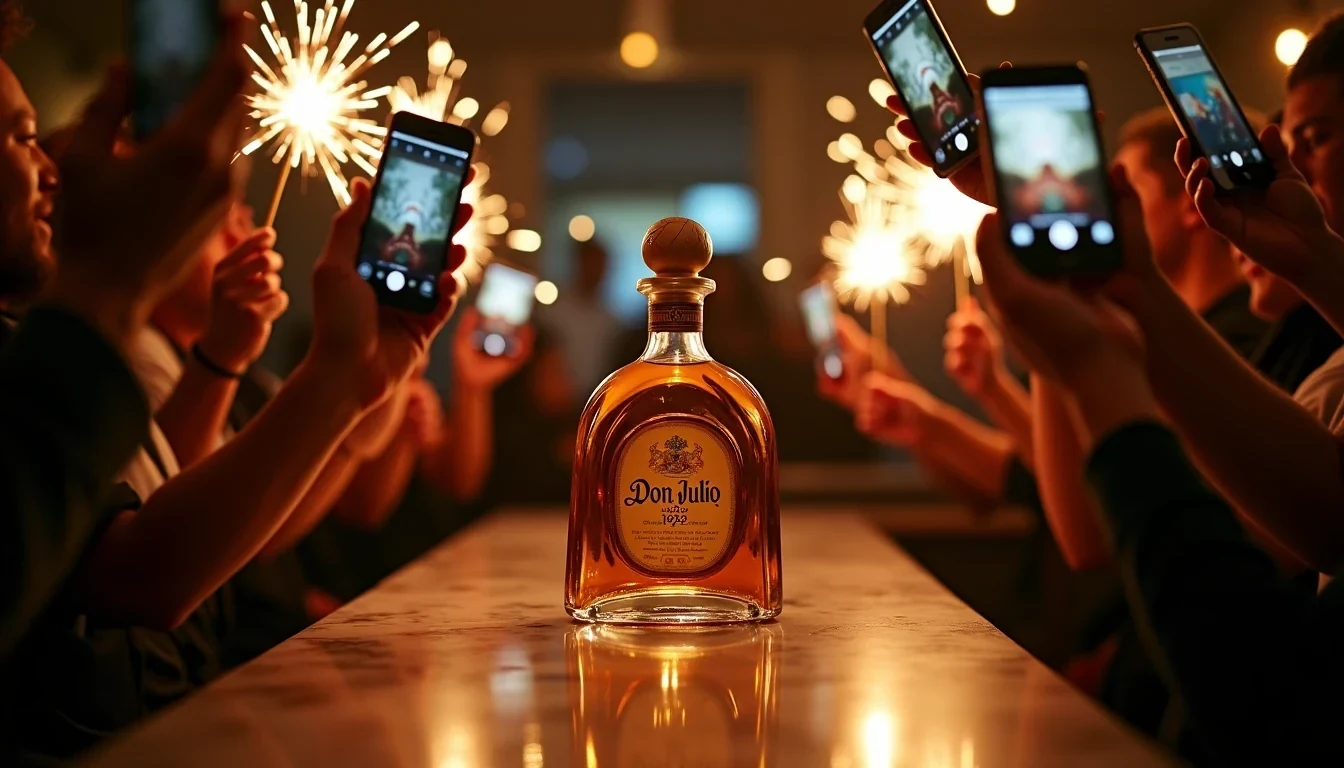
A bottle of Don Julio 1942 lands on a marble table in Rosebank, and eight phones rise in unison before anyone reaches for a glass. They capture the bottle itself, still sealed, still gleaming, still worth more than most people’s monthly grocery run. The tequila hasn’t been tasted yet, but it has already been performed.
This is the new arithmetic of South African nightlife, where a premium tequila bottle’s arrival carries more social weight than its contents ever could. What began as a shot slammed with salt and lemon has been recast as the centerpiece of a public ritual, complete with sparklers, dedicated wait staff, and the brief hush of a DJ who knows which tables pay his fee. Champagne and cognac still move, but the energy has shifted. The bottles that draw eyes across VIP sections now come from Jalisco, not Cognac or Reims, and the people ordering them want you to know they know the difference.
How a bottle earns its table price
The journey from Mexican agave field to Johannesburg table tells a story about what we are actually paying for. Specialized importers like Diageo and Pernod Ricard, alongside smaller independent operators, hold exclusive rights to bring brands across the border. They handle customs, duties, warehousing, and the bureaucratic marathon of getting liquid from Guadalajara to Gauteng. A bottle like Don Julio 1942 might arrive at a landed cost between R800 and R1,200. By the time it clears bonded storage and reaches a distributor, that figure has climbed to roughly R1,800–R2,500 for the venue buying it.
Then the markup begins. Clubs and lounges in Sandton, Cape Town’s CBD, and Durban’s Florida Road apply multipliers that would make a retailer blush. A bottle purchased for R2,000–R3,000 wholesale appears on menus between R6,000 and R12,000. Clase Azul Reposado, with its hand-painted ceramic decanter, can fetch R12,000 to R18,000. The math is not hidden; it is part of the point. You are not buying fermented agave. You are buying the right to have that specific bottle arrive at your table while the room watches.
Patron Silver, the more accessible premium entry, retails around R700–R1,000 but commands R2,500–R4,000 in venues. Casamigos, riding George Clooney’s coattails, makes a similar leap. The gap between shelf price and table price is the premium attached to being seen paying the premium.
What bartenders hear at the rail
Ask anyone pouring in a high-end venue which names get shouted over the music, and the hierarchy is consistent. Don Julio 1942 sits at the top, requested by customers who have never tasted añejo tequila outside a club but know precisely what the slender amber bottle signals. Clase Azul follows, often ordered by people who will not drink it, who leave half the liquid while the ceramic vessel becomes a living-room trophy. Patron maintains its foothold through sheer recognition. Casamigos draws the crowd that follows celebrity brands from headphones to highballs.
Newer entrants are pushing in. Volcan de mi Tierra, with its modern luxury positioning, has found space in exclusive lounges. Teremana, Dwayne Johnson’s project, pulls younger customers who discovered the brand on Instagram before they saw it on a menu. The through-line is name recognition as social currency, not palate preference. Bartenders report that customers rarely ask for tasting notes. They ask for the bottle that will look correct when it arrives.
The machinery that built the moment
This did not happen by accident. Global celebrity ownership created the template. Clooney’s Casamigos sale to Diageo for roughly a billion dollars made tequila a legitimate wealth vehicle. Kendall Jenner’s 818 and Johnson’s Teremana reinforced the pattern. South African consumers, saturated in international celebrity culture through the same screens everyone else uses, absorbed the association without friction.
Local operators amplified it. Influencers and musicians began featuring specific bottles in content that blurred the line between organic lifestyle and paid partnership. Nightlife venues, reading the room, built activations around tequila brands, sponsored parties, and branded lounges. Limited releases and strategic scarcity completed the picture: a bottle that is hard to find is a bottle worth filming.
The social media mechanics are equally deliberate. The “eight people filming” phenomenon is the product. When a bottle arrives with sparklers and ceremony, the natural response is documentation. The documentation drives demand. The demand justifies the ceremony. The loop is closed before the first shot is poured.
The theatre of the table
Group rituals have always shaped how South Africans drink. The difference is the visibility. A bottle of cognac shared among friends in the 2000s was a private flex, known to the table and perhaps the adjacent one. A tequila bottle in 2024 is a public performance, staged for the room and the timeline simultaneously.
The arrival itself has been choreographed. Music dips. Staff move in formation. The bottle, already chosen for its photogenic properties, catches the light. Eight phones document the same object from slightly different angles, each owner crafting their own narrative of proximity to luxury. The bottle then sits as centerpiece, a prop in an hours-long tableau of projected success, until the evening ends and the ceramic decanter goes home with whoever paid.
Champagne and cognac were not displaced because they failed. They belonged to a different generation’s vocabulary of wealth, one less suited to the documentation demands of contemporary nightlife. Tequila offered freshness, celebrity alignment, and bottles designed for the camera. The transition took less than a decade.
What persists is the underlying impulse. The specific liquid changes, but the need to have the room know what you spent does not.