
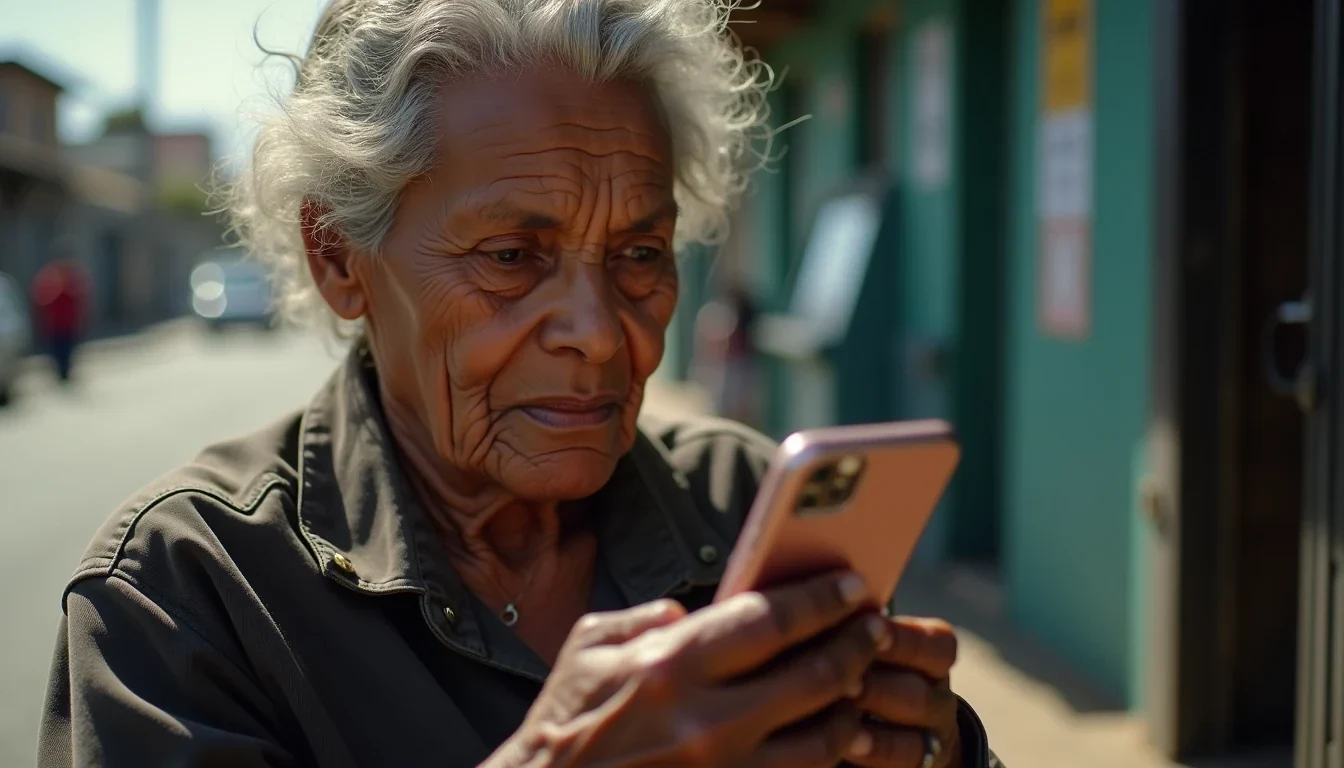
Your mother just sent “TBH” in the family group, and now nobody knows if she’s about to confess something serious or if she finally learned what the kids are saying. Meanwhile, your cousin Thando fired off “PMO to that braai spot,” and your uncle thought she was complaining about being annoyed. Same three letters, three different people, three completely different conversations happening in one chat while everyone pretends they understood.
This is the current state of South African WhatsApp groups. A 2026 analysis of local Google searches ranked “TBH” among the most queried text abbreviations in the country. Millions of people type these letters without being sure what they mean, or worse, they think they know and get it wrong. The same search data caught “PMO” operating with two separate lives: one as “put me on” and another carrying a more irritated, fed-up energy depending on who’s reading it. The dictionary died quietly, and nobody held a funeral.
How one family group becomes three separate languages
Picture the Mokoena family chat. Zinhle, sixteen, drops “TBH the vibes at groove were mid.” She means it as casual punctuation, the way her generation uses “to be honest” as verbal seasoning rather than actual honesty. Her older brother Siya, twenty-four, reads it the same way. Their mother reads it as a prelude to confession, bracing for bad news. Their grandmother reads it literally, wonders why anyone needs to announce they’re being honest now when they weren’t before, and sends a voice note asking if everything is okay at home.
“PMO” splits even harder. Zinhle uses it to request introduction, connection, access: “PMO to that new amapiano drop” or “PMO to your friend’s cousin who does nails.” Siya recognizes this but also uses it more loosely, sometimes venting, sometimes asking. Their mother sees the letters and hears complaint. Their grandmother sees letters she doesn’t recognize and ignores them, or worse, guesses wrong and responds to something that wasn’t said.
The same abbreviation, same family, four different dictionaries running simultaneously. Nobody is exactly wrong, and nobody is right either. The language moved faster than the agreement about what it means.
The South African layer that makes it messier
This isn’t just global internet slang landing here. Local code-switching adds its own velocity. A WhatsApp group in Soweto or Khayelitsha or Umlazi doesn’t stay in one language for more than two messages. English frames the sentence, isiZulu or isiXhosa or Sesotho supplies the emotional weight, Afrikaans drops in for the punchline, and internet abbreviations get glued on top like they’re just another linguistic layer. “Eish, TBH that price is too much hey” or “Aibo, PMO to where you got that.”
Voice notes complicate everything further. South African WhatsApp runs on voice note culture in ways that surprise people who think text abbreviations only matter in text. Someone listens to a voice note, catches the tone, and replies with “SMH” or “K” as shorthand reaction. But the recipient reads that text without the voice, without the face, without the shoulder-shrug that accompanied it. A single “K” from a teenager lands as efficient acknowledgment. From that same teenager’s mother, received by an auntie, it reads as cold, as angry, as the kind of brevity that starts family tension.
The “K” misunderstanding crosses every boundary. Younger users treat it as punctuation. Older generations, raised on letter-writing and phone calls where effort signaled care, experience it as deliberate distance. The abbreviation isn’t even internet-origin; it’s just a letter. Its digital context transformed it into something loaded.
When the dictionary gave up
There was a previous era, not long ago, when Oxford or Merriam-Webster would notice slang creeping into usage, debate it for months or years, then finally grant it printed legitimacy. That process assumed language moved at human speed. It doesn’t anymore.
South African TikTok trends born on Monday reach WhatsApp groups by Wednesday, get misunderstood by Thursday, get explained badly by Friday, and mean something slightly different by the next Monday. The 2026 search data showing “TBH” as heavily queried proves people are still catching up to something that peaked elsewhere weeks or months before. The query itself is a lag indicator. By the time someone’s googling what their child meant, the child has already moved through three subsequent phrases.
“PMO” existing as both request and complaint in the same search period illustrates something worse than simple confusion. It shows the same abbreviation actively diverging in real-time, not settling into one dominant meaning but splitting further. Dictionaries updated after language changed. Now language changes faster than the explanation can be typed, faster than the Google search can be completed, faster than the family argument about who meant what can resolve.
The generation that translates for a living
Someone in every South African family group has become the unofficial interpreter. Usually the youngest adult, sometimes the oldest teenager, occasionally a parent who works with younger colleagues and picked up fragments. They field private messages: “What did your sister mean by this?” They decode in real-time during family gatherings when someone references a chat misunderstanding from three days ago.
This role isn’t chosen; it accumulates. The translator becomes fluent in multiple generational dialects without ever studying them, just by existing in the overlap. They know when “TBH” is seasoning and when it’s confession. They can hear “PMO” in context and know which version landed. They understand that “SMH” isn’t a physical action description and that “IMO” prefaces stronger statements than older users expect.
But translation has limits. The translator ages. Their own slang starts lagging. The nineteen-year-old who decoded 2024’s abbreviations is twenty-two in 2026, working, slightly less online, slightly slower on the new platforms where language now mutates first. Someone younger takes over, or nobody does, and the misunderstandings multiply.
Your mother will send “TBH” again. Your cousin will write “PMO,” and someone will read it wrong. The family group will continue its beautiful, chaotic operation in multiple simultaneous languages, none of them fully shared, all of them somehow functioning well enough that nobody leaves the chat. That might be the most South African thing about it: we never agreed on what we were saying, but we kept talking anyway.