The lobola negotiation now gets a three-camera setup and a sponsored segment on kitchen appliances. This is not a joke; it is the business model.
Anika Dambuza built her platform as a white makoti learning isiXhosa, sharing every domestic milestone with over 200,000 YouTube subscribers and another 200,000 on Instagram. She has turned the most private rituals of South African family life into scheduled content. The kitchen where she cooks with her mother-in-law, the living room where she and her husband Sisa negotiate parenting, and the bride price conversations that previous generations conducted behind closed doors all now arrive with pre-roll ads and brand integrations. These must hit their marks before the family can eat their own meal off-camera.
What the camera catches and what it misses
Dambuza’s appeal has always been the friction of cultural exchange, made warm and watchable. Her audience sees the relatable stumble through a new language, the comedy of a Braamfontein-raised woman navigating Eastern Cape homestead protocols, and the universal exhaustion of parenting two small children. They do not see the conversation that happens before the record button: which argument gets paused, which relative declined to sign the release, or which moment of genuine marital tension got deleted in editing because it did not match the brand brief for that week’s family content.
The boundary work is constant and largely invisible. Her daughters appear regularly, their childhoods unfolding in thumbnail-optimized sequences, yet certain rooms in the house stay off-limits. Specific financial details, the rawer conflicts, and days when the performance of happy family life feels impossible are excluded. These exclusions are not dishonesty; they are survival. Without them, no private self remains when the engagement metrics close for the night, and no protected space exists where family members can be something other than co-stars.
The consent question nobody asks in the comments
Sisa Dambuza is a willing participant, visibly comfortable on camera, so it is easy to assume everyone signed up enthusiastically. The harder questions sit beneath that surface. What does ongoing consent look like when the family’s income depends on continued appearance? What happens when a child old enough to understand asks why strangers know her school schedule? What pressure falls on in-laws in a cultural context where refusing a makoti’s request carries its own social weight?
The ethics grow more complicated across generations. Elders who appear in content may not fully grasp how a TikTok clip travels, or how a YouTube video becomes training data for systems they have never heard of. The power imbalance between the person holding the camera and the person in frame is never neutral, even when everyone loves each other. Dambuza’s family is not being exploited in any obvious way, but “not obvious” is not the same as “not present.” The arrangement requires continuous renegotiation that the audience never witnesses, because renegotiation does not generate watch time.
When the brand becomes the script supervisor
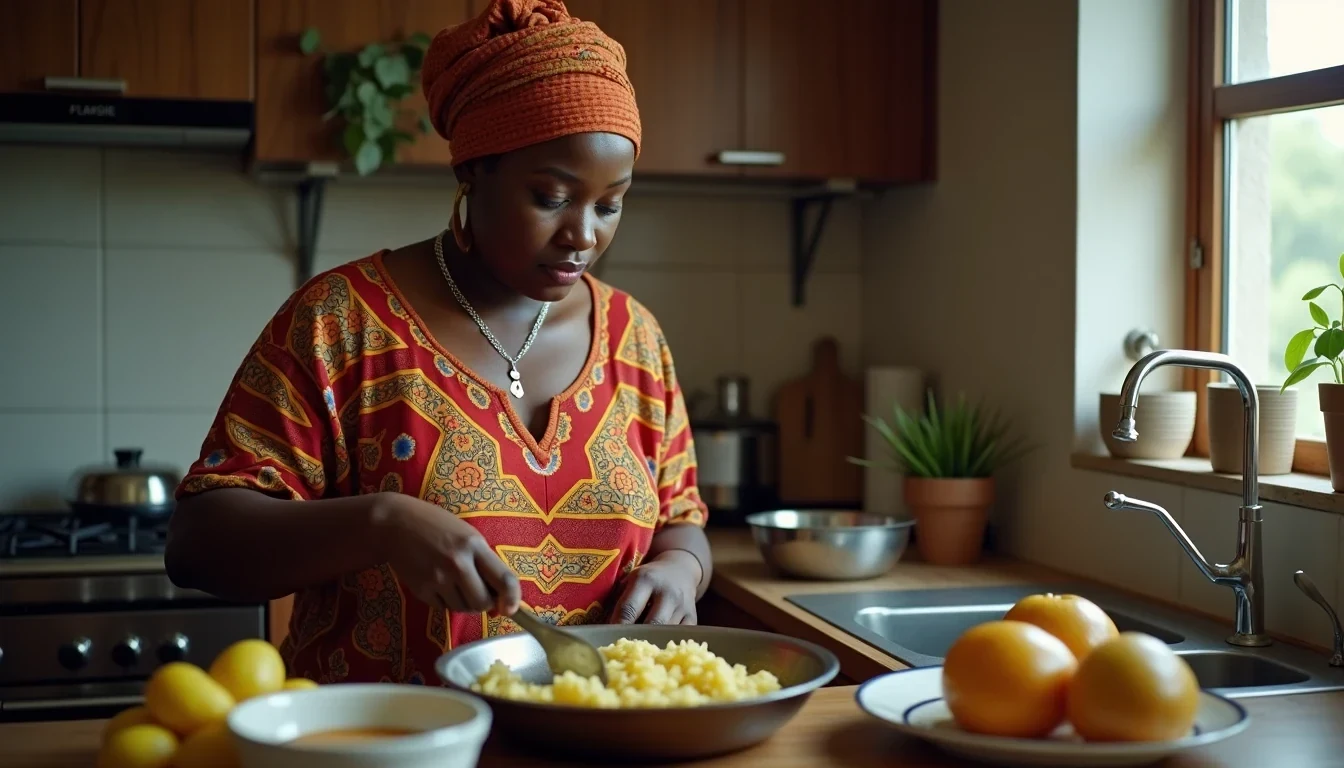
The sponsored cooking segment arrives with requirements. Product placement needs thirty seconds of screen time. The emotional arc of the vlog needs to land on gratitude, aspiration, or wholesome family chaos, depending on what the brand’s target demographic responds to this quarter. Dambuza’s skill is making this look spontaneous. The meal she prepares with her mother-in-law happens in a real kitchen with real ingredients, but the choice to film this meal on this day with this specific oil brand is a production decision.
This reshapes what gets remembered and how. The lobola discussion, when it appears, arrives filtered through what is appropriate for a family-friendly channel, what advances the “millionaire makoti” brand narrative, and what will not alienate advertisers. The actual conversation, with all its specific tensions and resolutions, becomes raw material for a version that serves multiple masters. It is not fake, exactly, but it is not unmediated either. The authenticity is real in the way a documentary is real: shaped by what the editor keeps, what the platform promotes, and what the algorithm rewards.
The invoice after the intimate moment
The personal cost of this production is harder to quantify than the revenue. There are the obvious expenses: camera equipment, editing software, and the freelancers who cut footage when the volume exceeds what one person can manage. Business registration, tax compliance, and contracts with brands all need reviewing. Hundreds of hours monthly look like “just living” on screen but are, in fact, labor.
Beyond that sits the less visible toll. The mental load of performing cheerfulness when the comments section dissects your parenting. The strain on relationships when a family member’s bad day becomes a scheduling problem because content is due. The particular loneliness of being simultaneously overexposed and unknown, recognized in Sandton City but understood only through the curated version that generates CPM revenue. Children learn early that certain behaviors earn more engagement than others, internalizing a metric-driven approach to their own presence before they have language for what is happening to them.
Dambuza has built something genuinely impressive: a business that validates cross-cultural marriage as public entertainment, pays well enough to justify the “millionaire” label, and creates representation where little existed before. The frame that contains this achievement also constrains it. The next lobola discussion, the next family crisis, and the next genuine moment of cultural confusion will all arrive with the same question attached. Is this happening because life happened this way, or because this is what the channel needs this week?
The answer, for every creator in this economy, is always both. That is the job.