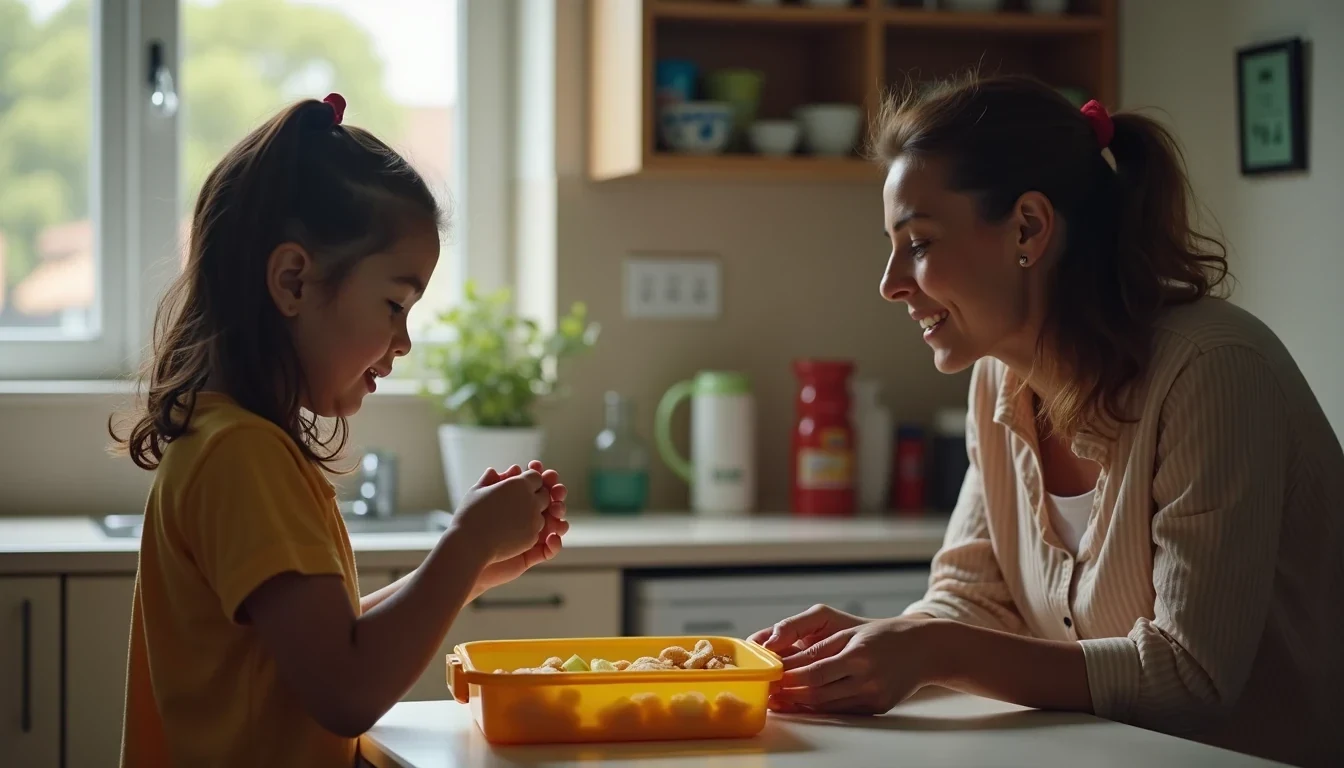
“Staan op, dis skool!”—four words shouted in a specific Pretoria Afrikaans register—and Dylan and Armand Pretorius were no longer just two brothers messing around on a channel with 200 followers. They were Hou My Dop, the name everyone in certain WhatsApp groups was forwarding that Tuesday morning. The skit ran maybe 90 seconds. A mother dragged a child through the rituals of a first school morning: the lunchbox anxiety, the hair inspection, the threat of what the teacher would say if you were late. This had happened in tens of thousands of homes across Gauteng that same morning, which is exactly why it worked.
What the clip actually did
The mechanics look simple only in retrospect. The opening line lands as a command, not a setup; there is no slow build or “hey guys welcome back.” The viewer is immediately inside the scene, already late, already in trouble. The short length means the joke does not overstay. By the time the algorithm registers you watched to the end, it is already looping. The real engine, however, was cultural specificity so sharp it could draw blood. The lunchbox was not generic; it carried the particular shame of the wrong snack. The mother’s tone was not broadly “strict parent” but recognisably Pretoria Afrikaans strict, a specific frequency that lands differently if you grew up inside it.
Comments became the second show. “Dis pres my ma!” appeared dozens of times, each one a small recognition ceremony. Viewers tagged siblings they had not spoken to in weeks, and old school friends they had not thought about in years. Former students remembered teachers they had survived. Parents saw themselves with uncomfortable clarity. The shares moved through networks that algorithms do not reach directly: family groups, church chats, the colleague thread where someone is always forwarding something. Pretoria locals claimed it with particular pride, as evidence that their specific corner of the world could generate its own humour rather than importing it from Johannesburg or Cape Town.
Who carried it beyond the brothers
The amplification did not come from celebrity retweets or marketing spend. It came from people who felt the skit had been filmed in their kitchen. Afrikaans-speaking communities across Gauteng recognised linguistic tics that would flatten or disappear in English translation. Parents of school-age children forwarded it as confession and commiseration. Young adults in their twenties and thirties, recently escaped from the school system, laughed with the particular relief of survivors watching a documentary about territory they had escaped.
Local community pages picked it up organically. These were not the big accounts with verification marks, but the smaller aggregation pages that serve as neighbourhood noticeboards. “Pretoria Memes” and its equivalents gave the skit a second wave of exposure to audiences who had missed the initial shares. Each repost came with its own comment thread, its own tagging chain, its own small explosion of recognition. The brothers had aimed for 1,000 followers by December. They hit numbers that made that target look quaint before the month turned.
The morning after the numbers
Then the feed refreshed, and the question arrived: what now? The internet delivers virality like weather, a sudden storm that soaks you without warning and leaves just as fast. It offers no manual for the day after. Dylan and Armand faced the classic trilemma that has stalled or broken dozens of South African creators who found themselves suddenly visible.
The first path tempts hardest: run it back. Another school skit. Another mother. Another first day, perhaps the last day, perhaps the parent-teacher conference. The formula is proven, the audience hungry, the engagement predictable. But formula quickly becomes a prison. The second path demands more: better equipment, consistent scheduling, learning editing software, thinking about brand alignment and monetisation, and whether this hobby can become income. That transformation requires time, money, and a tolerance for administration that kills the fun for many. The third path is retreat: post when inspired, ignore the metrics, accept that the moment was lovely and temporary, and return to whatever Tuesday looked like before “Staan op, dis skool!” changed it.
Each option carries its particular grief. Replication risks becoming known only for that one thing. Professionalisation risks losing the rawness that made the first hit land. Retreat risks watching the numbers fade and wondering what might have happened with more courage or more time.
What happens to local humour when it goes wide
The Hou My Dop story carries a tension particular to South African content creation. Hyper-local humour travels well inside its community but poorly outside it. The skit did not go viral because it explained Afrikaans school culture to outsiders. It went viral because it refused to explain anything, trusting that the right viewers would find themselves inside it without footnotes. That specificity is both its strength and its limitation.
If the brothers professionalise, they face pressure to broaden, to translate, to make the references accessible to audiences who did not grow up with that particular mother or that particular lunchbox anxiety. But broadening often dilutes. The mother becomes “a mom” instead of that mom. The school becomes generic instead of recognisably Pretoria. The comments shift from “Dis pres my ma!” to “lol so relatable,” which is not the same thing at all.
The alternative is to stay narrow, to serve the community that found them first, and to trust that depth of connection outperforms breadth of reach. It is a harder commercial proposition and perhaps a more sustainable creative one. South African group chats are full of content that never broke out of its language or its city but travelled perfectly well inside them.
The brothers started with 200 followers and a modest target. Virality gave them an audience they had not asked for and choices they had not prepared to make. Whatever they decide, the skit already proved something useful: that a specific Pretoria morning, rendered precisely enough, could become everyone’s morning. The harder trick is doing it twice without becoming a cover band of your own accidental success.