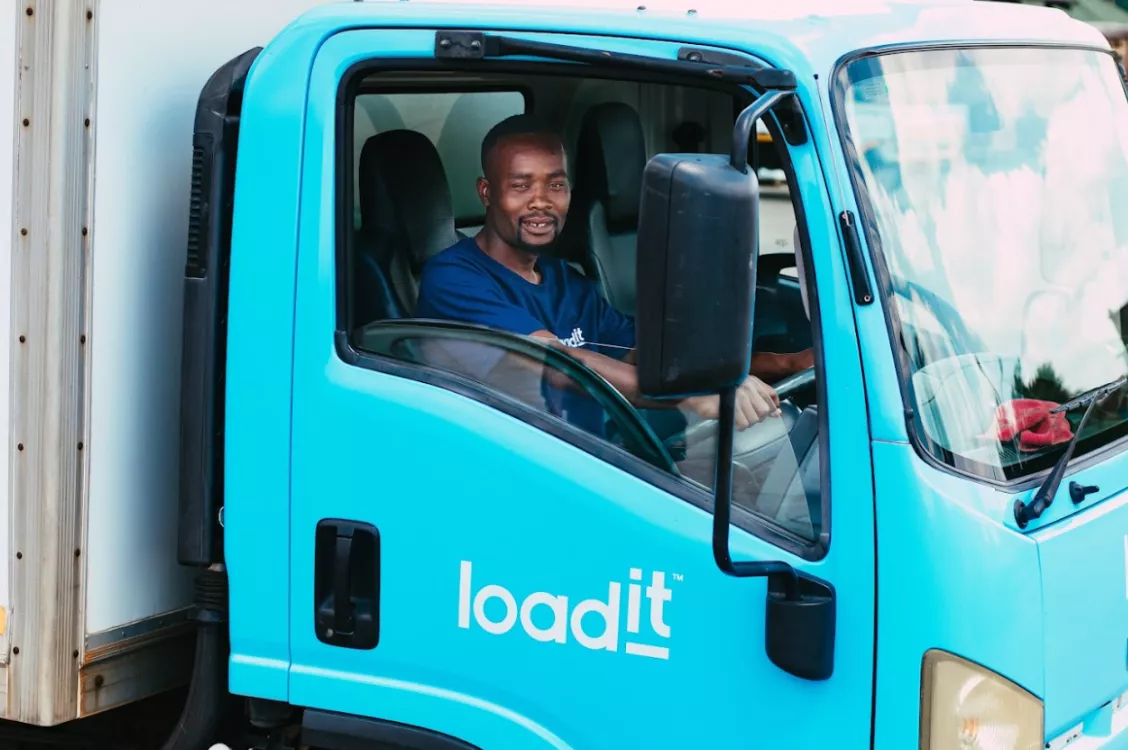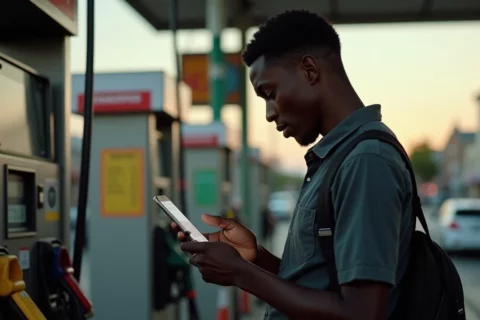
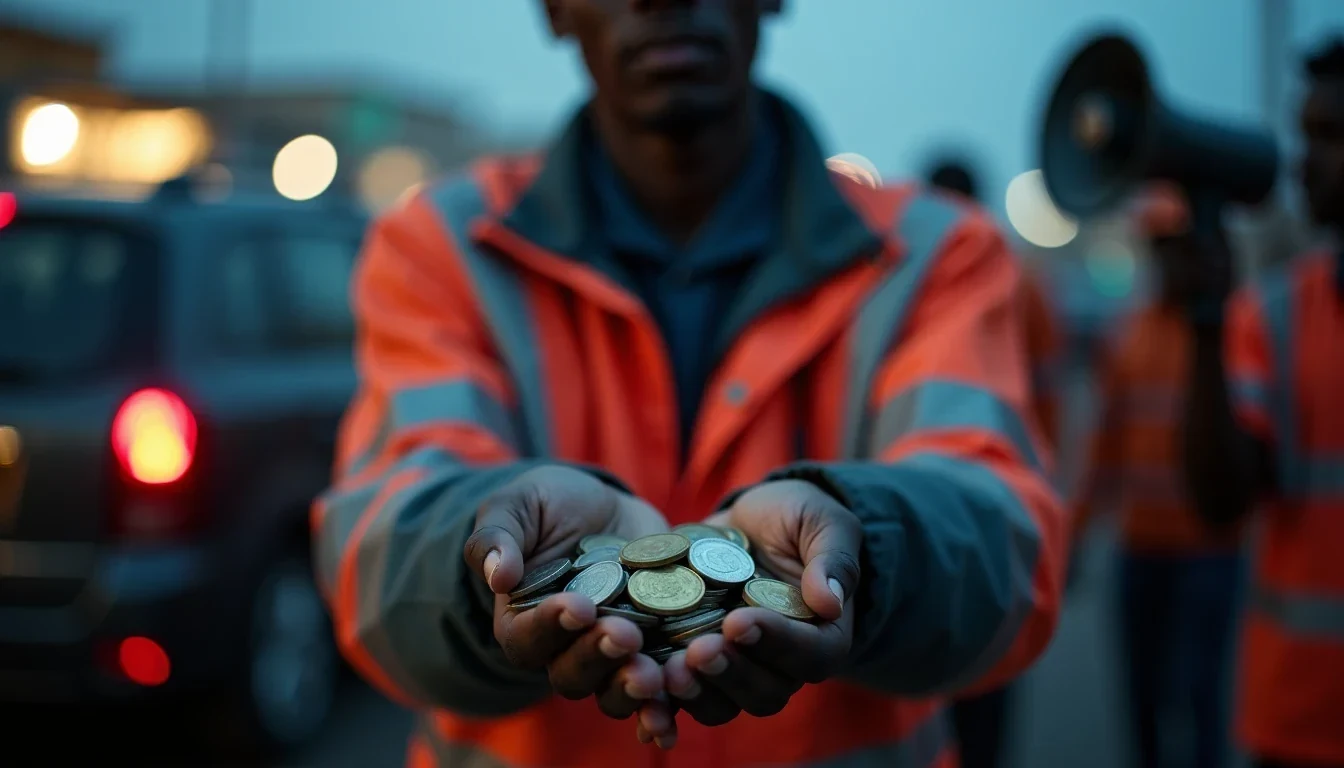
The taxi rank does not look dramatic at 5:45 in the morning. It looks familiar, which is worse. Men in reflector jackets. A conductor shouting destinations over a half-broken loudhailer. Someone counting coins twice before handing them over. By the time you reach work, you have already spent money, energy, and half your patience. By the end of the month, you have spent something else too. Your taxi fare has started acting like rent.
In Soweto, Umlazi, and Khayelitsha, this is no longer a throwaway complaint from people who hate mornings. For a lot of workers, the commute has become a fixed bill that behaves like a second roof over the head. Fuel costs climb, taxi fares follow, and the money comes out of the same salary that is supposed to cover food, electricity, school shoes, data, and actual rent.
The fare before breakfast
A worker commuting from Protea Glen to the Johannesburg CBD can easily pay R25 to R30 each way. That is R50 to R60 a day. Over 22 workdays, the bill lands somewhere around R1,100 to R1,320 before you have bought lunch or sat in traffic on your feet.
Move that same logic to Tembisa or Katlehong and the route gets uglier fast, especially if Sandton or Pretoria CBD is the destination and the trip needs more than one taxi. One leg to a major interchange, another leg to the office district, and suddenly the “cheap” taxi trip is doing gym pricing in disguise.
Durban is no bargain either. From Umlazi or KwaMashu to the Durban CBD, a return trip often sits around R40 to R50 a day if the route is direct. That works out to roughly R880 to R1,100 a month. Once you add transfers or a longer detour, R1,200 to R1,500 is not a stretch; it is just Tuesday.
Cape Town delivers the same punch with a different skyline. Khayelitsha or Mitchells Plain to the Cape Town CBD can cost R25 to R30 one way, so R50 to R60 back and forth. Over a month, that is R1,100 to R1,320 for a direct run. Start from Dunoon or Philippi, where multiple taxis are often part of the deal, and the monthly bill can push past R1,500 without much drama.
The hidden charges no one prints on the fare board
The fare itself is only the headline. The waiting is the invoice nobody likes to count. Thirty minutes here, forty minutes there, sometimes an hour if taxis are thin on the ground or the rank is moving like it is powered by argument. By month end, that can swallow 10 to 20 hours of your life. Nobody pays you for standing at a rank pretending the next taxi will appear out of civic duty.
Then there is the transfer tax. A commuter who needs two taxi changes is not paying one fare; they are paying three legs to get to one destination. A R20 single leg can become R60 one way when the route is stitched together through multiple ranks. Do that both ways, five days a week, and the monthly bill can climb past R2,640. At that point the commute is no longer a commute; it is a subscription.
Late shifts make the whole thing nastier. After 8pm, or after overtime, taxis often charge more because fewer vehicles are running and the homebound crowd is desperate. A R25 trip can suddenly become R40 or R50. Retail workers, security guards, restaurant staff, and cleaners feel this hardest, because their work hours do not always match taxi hours. If the rank is dark and the area is sketchy, people also pay for a direct lift or e-hailing trip instead of gambling with safety. That can cost two or three times the taxi fare, which is a ridiculous price for simply getting home alive and on time.
The salary gets eaten alive
The national minimum wage sits at R25.42 an hour, which works out to about R4,400 a month for a full-time worker. Plenty of people in retail, cleaning, and security earn somewhere in the R4,000 to R7,000 range. On paper that sounds like income. In practice, it is a monthly tug-of-war between the taxi rank and the fridge.
If rent is R1,500 and transport is R1,200, a worker on R5,000 is left with R2,300 for food, toiletries, electricity, data, debt, and everything else that still insists on being paid. That is how a taxi bill becomes a second rent payment. In some neighbourhoods, a single room costs R1,200 to R2,500 a month anyway. A backyard room in Soweto can sit around R1,500 to R2,000. A room in Khayelitsha can be around R1,200. So the commute and the roof over your head start competing for the same share of the month.
The problem gets sharper for workers who have no backup plan. If taxis are the only way to get to work, then every fare increase lands directly on the household budget. Savings disappear. Emergency money never appears. When wages do not stretch, people borrow from mashonisas or take short-term loans just to keep showing up. That is a horrible loop, because the next payday arrives already pre-spent.
The job starts looking too expensive to keep
A commute this expensive changes behaviour in the real world, not just in budget spreadsheets. People turn down jobs that are technically available but too far from home. Others stay trapped in nearby low-wage work because a better salary across town would be swallowed by transport. Some arrive late often enough to pick up warnings, docked pay, or dismissal. The transport system is not only taking cash; it is deciding who gets to keep a job and who gets squeezed out of one.
This is why the taxi fare story keeps landing so hard online and at the dinner table. It is not a complaint about small change. It is a story about how a worker can be employed and still feel economically cornered. The job exists, the payslip exists, and yet the route there keeps asking for another share.
The hard truth is sitting in plain sight at the rank. For many South Africans, the question is no longer whether there is work. It is whether the work still makes sense once the taxi money is gone.