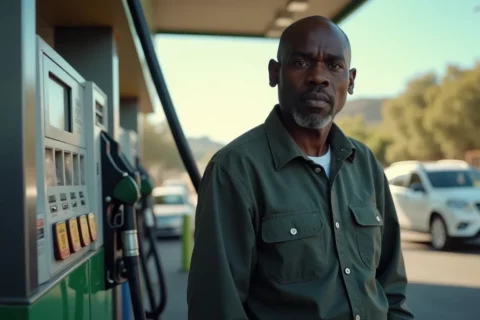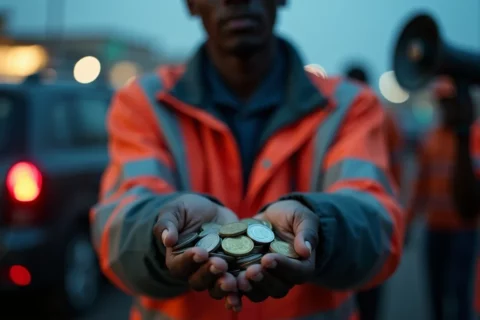

The petrol board can drop, and half of South Africa will still act like someone has stolen from them. This is not because the number is fake, but because it does less emotional work than it used to. A litre at R24-something sounds cheaper than the R26.31 spike we all saw in July 2022. It still does not sound like relief when debit orders, school fees, tyres, and rent have already taken their piece.
This is the joke and the insult at the same time. We celebrate a fuel drop like money has landed in the account, then fill up on the way to work and discover the account did not get the memo.
The price we remember is not the price we live with
Stats SA’s petrol history shows that “normal” is a moving target. Inland 95 Unleaded sat around R4.39 a litre in June 2004, climbed to roughly R13.73 by June 2014, and was about R16.67 in June 2019. By June 2024, it was around R24.94. This is not a small drift; it reflects a different life.
Most motorists do not shop with a calendar in hand; they shop with memory. For plenty of people, the mental benchmark is still the era when petrol flirted with R10 a litre and everyone behaved as if that was the natural order of things. Once that figure gets lodged in the head, anything above it feels like a robbery, even when it is technically lower than the worst month on record.
A drop from R26.31 to R19.99 can still leave people unimpressed. A lower number is not the same as a manageable one. If your budget was built in the R10-and-under years, a litre in the mid-R20s still feels like a hand in your pocket.
What motorists are actually paying for
The cruel trick with car ownership is that petrol is only the loudest bill. It gets all the shouting on X and in the queue at the garage, but it is rarely the biggest monthly drain. The instalment arrives first, then insurance, then parking if you work anywhere near a mall, CBD, or office block that charges you just for the privilege of turning off the ignition. Then comes maintenance, which always behaves as if it has read your pay slip and decided to be cruel.
A modest new car at about R250,000, financed over 72 months at 12 percent, can easily mean repayments of R5,000 to R6,000 a month before you have even put a key in the ignition. Insurance can add another R800 to more than R2,000, depending on the car and your profile. A routine service can cost R3,000 to R8,000, and tyres are not shy either. Even one tyre can swallow R1,000 to R2,500. Then there is the licence renewal, which may not be dramatic, but it still shows up. Add depreciation, and the car starts looking less like transport and more like a slow leak with a steering wheel.
So when petrol falls by a few cents or even a rand, the relief is real but tiny. If you are filling a 50-litre tank, a 50-cent drop saves you R25. A R1.50 drop saves you R75. This is not nothing, but it is not enough to rewrite the month.
Why the relief disappears so fast
The first reason is timing. By the time fuel goes down, the rest of life has usually moved on and become more expensive. Food is up. Electricity is up. Municipal bills are up. Interest rates have spent long stretches making debt expensive. If you have a car loan, the monthly payment does not care that petrol dipped this week.
The second reason is that the fuel price itself contains a lot of invisible baggage. Oil may move on the world market, but we pay for it in rand, which means every wobble in the exchange rate lands in the price at the forecourt. On top of that sit the levies that turn every litre into a little tax lesson. The General Fuel Levy and the Road Accident Fund levy together add more than R6 a litre. So even when the crude price behaves itself, the final number still arrives with attitude.
There is also the psychology of the thing. A household that has spent months bracing for high fuel costs does not suddenly relax because the price slipped a little. The budget has already adapted to pain. Once that happens, small wins feel cosmetic. You clap for the decrease, then carry on budgeting as if it never happened.
The bigger story is not the pump
People talk about petrol as if it is a single item, like bread or airtime. It is not. It is the visible front end of a much bigger ownership bill. The conversation keeps sounding contradictory because South Africans can look at a lower pump price and still feel broke. The petrol price is only one slice of a car’s monthly appetite.
This is also why the old R10 memory keeps winning. It is not nostalgia for nostalgia’s sake; it is comparison. The number in the head comes from a time when cars cost less to finance, insurance was lighter on the wallet, and the rest of the month had more breathing room. Today the same vehicle sits inside a tighter household economy, and the petrol bill lands in a house that is already busy carrying too much.
So yes, fuel can be lower than its recent peak and still feel expensive. This is not confusion; it is arithmetic mixed with memory. And around here, memory is often the louder accountant.