A kitchen can still look like a showroom even with a school bag by the fridge and a kettle halfway through its third boil. Homeowners now seek spaces that handle the demands of family life but still feel tastefully designed.
The old approach was simple: install cupboards, add a worktop, and consider it done. The current trend is less rigid. People want visible grain, flattering lights, an island that looks like it belongs in a magazine, and a room that feels considered from the first coffee to the last plate stacked after supper.
Wood is doing the heavy lifting
The fastest way to make a kitchen feel expensive is also the least flashy: let the timber speak. Ribbed fronts, visible grain, and larger blocks of wood on doors or panels give kitchens a more deliberate, crafted look than the glossy, blank-box style that spent years pretending to be timeless.
In smaller kitchens, lighter timber with white paint prevents the room from feeling boxed in. In larger spaces, darker wood against pale walls adds depth without becoming heavy. Bespoke Custom wood joinery has become a useful part of the conversation because it allows the room to be tailored instead of copied from a catalogue, and it gives the wood a proper job instead of treating it like decoration.
A brand like Woodgrain fits naturally into this picture. The appeal extends beyond the look; it is the sense that the joinery has been measured, finished, and built to withstand daily use without falling apart after the first round of renovations and moving furniture.
The island has stopped behaving
A kitchen island used to be the safe middle child of the room, useful but forgettable. Now it is the statement piece. If the sink is the workhorse and the cupboards are the background, the island is the one trying to get photographed.
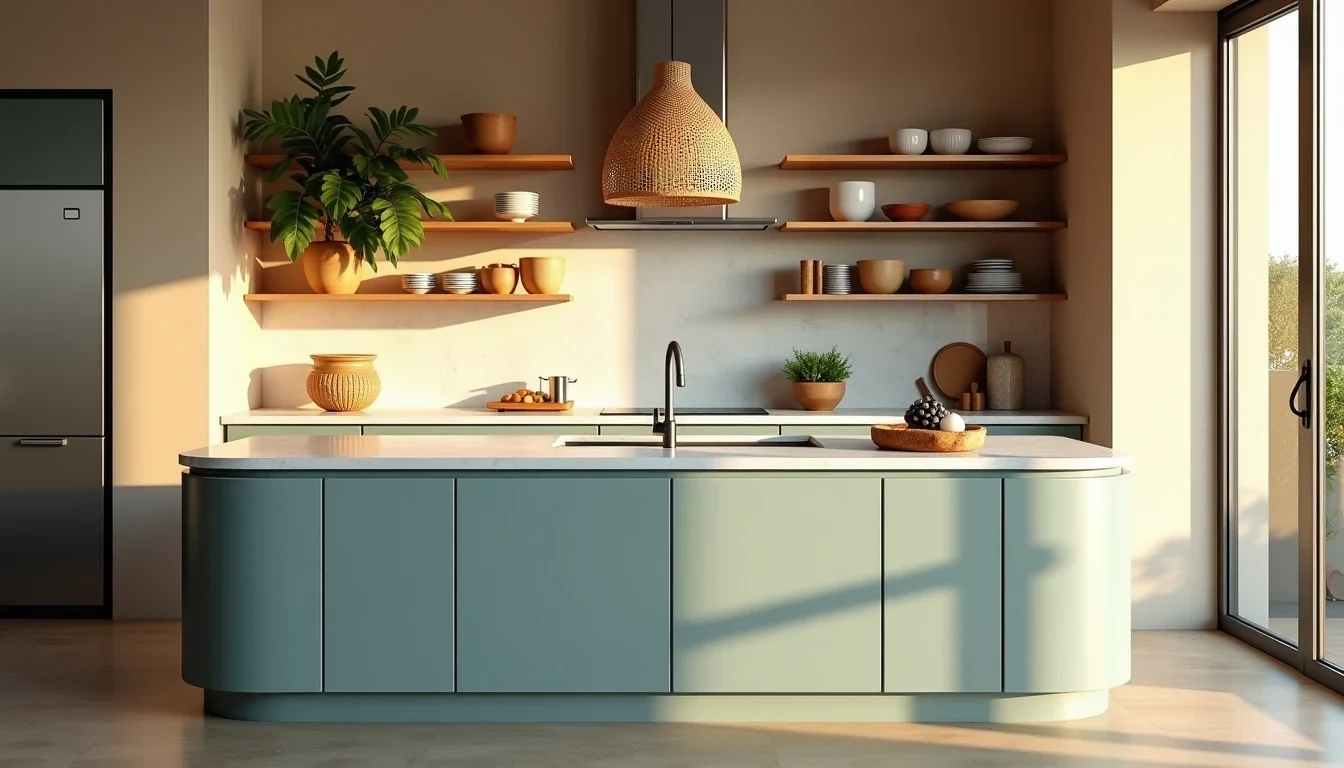
The trend moves away from standard, boxy shapes toward something with personality. A strong example is a two-tone island with a white marble top and rounded duck egg blue cabinetry. This sounds almost too neat on paper, but in a real kitchen it serves two purposes: it provides a clean working surface and immediately draws the eye, which is exactly what a central feature should do.
Pair that with a handcrafted chandelier above the island or breakfast nook, and the room’s character changes. It feels less like a place to rush through and more like a place to linger, pour another cup, and pretend you are not late for work.
Marble and two-tone kitchens are still winning
Polished marble consistently appears in high-end kitchens because its surface makes everything else behave. Veining adds movement, the finish reflects light, and the whole thing reads as polished without needing to shout about it.
The same logic drives the continued appeal of two-tone kitchens. They are easy to live with, easy to refresh, and hard to make look dated if the proportions are right. The classic version typically features black cabinetry, brass handles, white marble countertops, white subway tile, and matching appliances. It is formal without feeling stiff. For a bolder look, white paired with a pastel colour can loosen the mood without making the kitchen resemble a child’s sweet shop.
The white kitchen remains popular for a reason. It makes a room feel brighter and more open, which is important when the space serves multiple functions. A white backdrop also allows brass handles, wooden joinery, and good lighting to stand out instead of competing for attention.
The small details are doing more than people admit
A tired kitchen rarely needs a full demolition to feel better; sometimes it just needs better decisions. Deep green tiles across a backsplash can revitalize the entire room. Minimalist shelving keeps the eye moving. Brass fittings on cabinets add warmth without becoming fussy. A couple of potted plants hanging from the shelves make the room feel lived-in, not staged.
Lighting is where people either succeed or accidentally make the whole place feel like a parking garage. Exposed cables with downlights create an industrial mood. A handcrafted chandelier over the island or table shifts the room toward something softer and more elegant. The difference is huge, even if the change sounds tiny when spoken aloud.
For those who want a kitchen with attitude, a more textured route exists. Exposed brick wallpaper, raw wood bar stools, industrial-style lighting, and an area rug can transform the room into something with real personality. This kind of setup often prompts visitors to ask who designed the kitchen, which is usually the point.
What this says about the moment
The kitchen has become the room where people try to display taste without appearing to try too hard. This is a very South African balancing act. We want something beautiful, but we also want it to survive lunchboxes, traffic, relatives, and the usual household chaos.
The best-looking kitchens right now are not just about price tags. They are about restraint, texture, and craftsmanship. They mix classic with contemporary, use wood properly, treat the island as a feature, and apply marble, brass, and lighting with discipline. They understand that a well-built kitchen joinery package can carry a room for years, not just for the reveal photos.
The funny part is that these kitchens do not always look extravagant in an obvious way. They just look finished. Once you have seen one that achieves the right balance, your own cupboards start looking a little too apologetic.