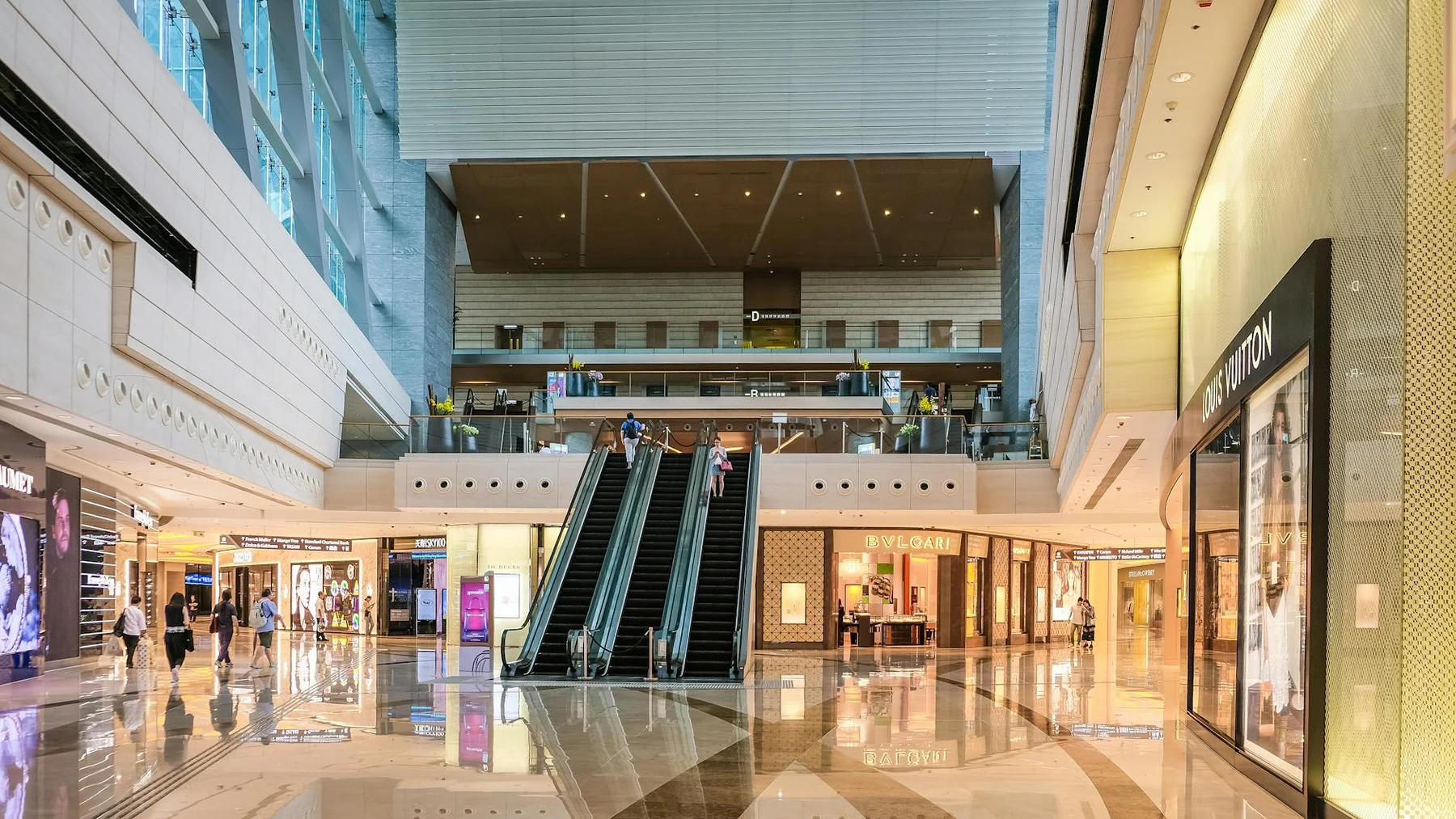
I stopped outside a Sandton City window thinking I was looking at a shop, and ended up studying a stage. One spotlight, one hero product, a clean backdrop, and enough restraint to make the whole frontage feel more expensive than the stock behind it probably was. That is the trick Johannesburg’s better retail windows keep pulling off: they make you pause for long enough to imagine yourself inside.
Weekend foot traffic does half the work, but the display does the real selling. It is the first handshake between the brand and the passerby, and in premium retail that handshake has to do more than look neat. It has to create a reason to cross the threshold, a reason to stay, and a reason to buy more than the one thing that caught your eye.
Why the window has the hard job
A good window is doing merchandising before the shopper even touches the door handle. It has to sell the mood, the price tier, the taste level, and the sort of customer the store wants to attract. That is why premium retailers spend so much energy on the front edge of the shop floor, not just the shelves inside. The display is not decoration. It is a filter.
The best ones are built around a single strong idea. Maybe it is a watch displayed like a piece of sculpture. Maybe it is a fashion drop framed with travel imagery, polished metal, and one dramatic colour. Maybe it is a cosmetics launch where the palette, lighting, and props all point back to one clear promise. The point is not to show everything. It is to make you curious enough to want the rest of the range.
Johannesburg responds well to that kind of discipline. In a city where luxury malls sit beside busy pedestrian flow and competing storefronts, a weak window disappears immediately. A strong one has to cut through reflections, passing cars, and the general noise of retail life. That usually means clean composition, controlled lighting, and a central theme that can be read in a second from several metres away.
What the best displays actually do
The sharpest windows use visual merchandising as a proper sales tool. That means the design is built around more than a pretty arrangement of stock. It combines retail know-how, marketing logic, and graphic design that understands how people move, stop, and scan.
The usual ingredients are easy to spot once you start paying attention. Light is used to isolate a hero item. Colour is chosen to push a mood, warmer tones for comfort and richness, cooler tones for precision or modernity. Texture does part of the heavy lifting too, especially when a display mixes matte and gloss, soft fabric and hard metal, or plain product with a more theatrical backdrop.
The Look Company’s own framing of the category makes sense here. It points to graphic lightboxes for contrast, and fabric wall coverings for fast changes in mood and scale. Those are practical tools, not vanity extras. A lightbox can make a logo or product detail punch through a window that would otherwise flatten out in daylight. Fabric walls and printed textiles let a retailer shift from one story to another without rebuilding the whole frontage.
That flexibility matters in South Africa, where seasonal changes, product launches, and campaign resets have to happen quickly. A display that is a Christmas scene in December and a clean summer launch in November is doing real work. A display that takes three people and an entire afternoon to change will probably be stale by the time the next promotion lands.
Why shoppers keep looking
Window shopping used to mean looking with no intention of buying. That definition feels old now. The display may still be outside, but the effect often shows up later, sometimes much later, when the brand name comes back into a shopper’s head and nudges a decision.
Retailers know this. They also know that the win is not only the featured item. A good window should pull people toward the broader range, because once they are inside the store the sale can expand. That is where basket value matters. One watch becomes a strap, a gift box, maybe another accessory. One jacket becomes shoes, a belt, and a second stop at checkout. The display starts the conversation, but the store layout finishes it.
That is why premium stores are leaning into immersive presentation. The stronger version of visual merchandising now tries to tell a story rather than just line up products. A luxury fashion window might suggest a trip, a gallery opening, or a city break. A beauty window might borrow from a spa, a lab, or a ritual of self-care. A tech window can work a minimalist, future-facing tone without looking cold if the lighting is right and the products are given enough space to breathe.
Some retailers are even adding other senses into the mix, including scent, sound, and occasionally touch. It is still early days in South Africa, but the idea is obvious enough. If the window can make a shopper remember how a brand feels, the store has already done part of the selling.
Where to find the strongest examples
Johannesburg is still the obvious place to start, especially around Sandton City, where luxury brands tend to treat their windows like miniature exhibitions. The best examples there use scale, shine, and a very controlled sense of drama. You often see one central product, one clear message, and enough space around both to make the whole thing feel deliberate.
Cape Town’s V&A Waterfront gives a different reading of the same idea. The mood there often leans more visual and less formal, with fashion windows that borrow from travel, colour, and movement. It is a good reminder that the right display depends on location as much as budget. A premium store in Cape Town is speaking to a different street rhythm than one in Sandton, and a clever window knows the difference.
For shoppers, that means the interesting part is not just the product inside the glass. It is the way the store chooses to introduce itself. In Pretoria, Durban, and the bigger precincts around the country’s major malls, the same rule applies. The windows worth stopping for are the ones that make a clear argument in a few seconds and leave you wanting to see the rest.
The old Ogilvy department store window exhibitions at Montreal’s McCord Museum, staged every Christmas since 1947, are a neat reminder that this is not a minor retail flourish. Done properly, a window display becomes part theatre, part marketing, part memory. Johannesburg’s best ones understand that a passerby is not a distraction. They are the audience.