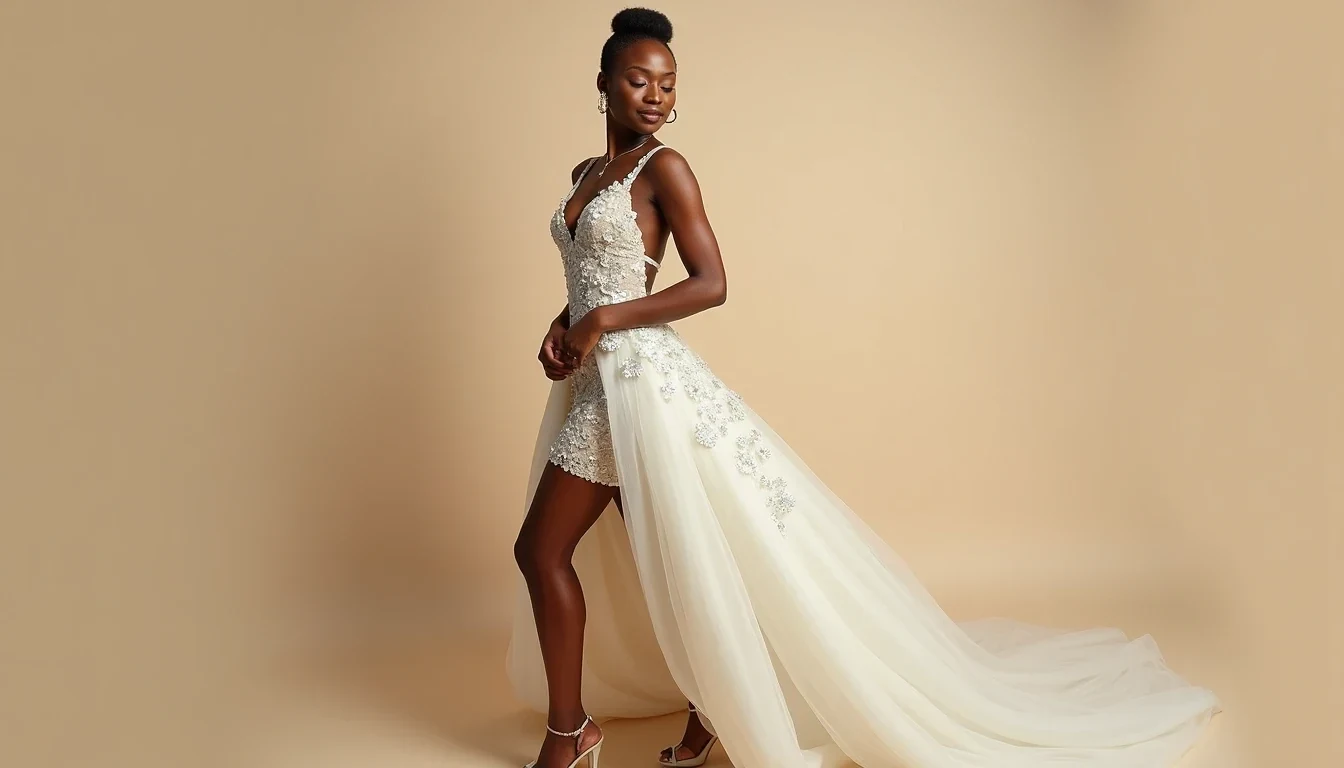
The dress arrived at Greyville three days before the horses did. It sat in a climate-controlled studio in Durban North, pinned to a rack, waiting for Somizi to step into frame while his photographer tested strobes against a cream backdrop. By the time the actual Hollywoodbets Durban July opened its gates on 5 July 2026, half the country’s timeline had already been colonised by “Country Allure” interpretations that never once risked a grass stain. Thembi Seete’s beaded collar caught light that no July afternoon produces. DJ Tira’s boots stood on seamless paper, not the beer-spilled concrete of the hospitality village. Lasizwe posed against a fan for wind effect rather than waiting for whatever humidity the Indian Ocean pushed inland that morning. The event still happened, but the outfits increasingly did not need it to.
The Studio Look and the Racecourse Look Are No Longer the Same Garment
Compare the two versions of any 2026 July outfit and you are looking at different objects with different purposes. The studio version lives under softboxes that flatten every shadow, shot from angles selected in pre-production, retouched until the fabric loses any texture that might distract from the silhouette. The Greyville version, if it appears at all, arrives via phone cameras catching celebrities mid-conversation, blinking, sweating, or caught between the VIP tent poles and a promotional banner for a vodka brand nobody asked about.
The controlled image allows a R120,000 bespoke piece to remain immaculate, its construction details visible only because the photographer lit them that way. The racecourse image shows what happens when that same construction meets four hours of sitting on plastic chairs, navigating crowd bottlenecks between the parade ring and the main lawn, and the particular Durban July weather pattern of morning cloud burning off into afternoon glare that makes every metallic thread look either washed out or aggressively reflective. One version is architecture; the other is evidence.
Designers have adapted to this split. Several Durban-based ateliers now construct July pieces specifically for the studio frame, with back details and train lengths that would not survive a taxi transfer to Greyville, let alone a full day of public circulation. The garment is built for the photograph, and the photograph is built for the Instagram grid. Whether it could function as clothing at an outdoor event becomes a secondary consideration, if it is considered at all.
The Machine Behind a Single Post
The studio photograph that replaced physical attendance does not emerge from a phone and a ring light. A single elaborate July look now travels through a production chain that would not look out of place on a commercial campaign.
The designer commands the largest line item, with bespoke work from established South African names running between R25,000 and R150,000 for concept through final stitch. The stylist, at R15,000 to R40,000, sources accessories and maintains brand coherence across every planned image. A recognised fashion photographer with studio infrastructure charges R20,000 to R70,000 for the day, before retouchers add another R5,000 to R20,000 to remove anything the lens caught that the concept did not intend. Hair and makeup teams demand R7,000 to R20,000 for sessions that run long enough to accommodate multiple look changes. Studio rental with proper lighting packages adds R5,000 to R25,000. The total, conservatively, sits between R70,000 and R300,000 for content that may generate its intended engagement in under forty-eight hours.
That investment follows a publishing schedule as rigid as any magazine deadline. Teasers drop a week before the July. The main reveal hits two to three days prior, capturing early algorithmic momentum. Event-day posts maintain presence without requiring presence. Follow-up content extends the half-life through the week after. The celebrity’s social media manager coordinates this release like a product launch, which is precisely what it has become.
Why the Physical Body Became Optional
The mathematics of attention explain why Somizi or Lasizwe might judge the studio shoot sufficient. A controlled image reaches exponentially more devices than any physical appearance at Greyville. The crowd inside the racecourse gates on July day counts in thousands. A single post from a major South African celebrity counts its reach in millions. The studio image also arrives pre-approved, pre-tested, and free of the risks that attend public visibility: unflattering angles, wardrobe malfunctions, unexpected interactions with the general public, or the ambient chaos of an outdoor event that does not pause for anyone’s content calendar.
Sponsors have accelerated this shift. Brand partnership agreements now specify deliverable quality in terms that candid event photography cannot reliably meet. A studio campaign guarantees the lighting, the backdrop, the product placement, and the retouching standards that contractual obligations demand. The Durban July functions as a content deadline because the contracts make it one, with horses and hospitality tents as optional background elements.
Physical attendance still occurs, particularly for performers like DJ Tira who have professional reasons to be present. But the fashion statement and the physical presence have decoupled. A celebrity can dominate the July conversation without their shoes touching the Greyville turf, and the industry has reorganised itself around this possibility.
The Content Deadline with Horses in the Background
What remains, then, of the Hollywoodbets Durban July as an actual event? The racing continues. The hospitality packages sell out. The social calendar persists. But the fashion narrative, the dominant cultural product that the July generates for national conversation, increasingly originates elsewhere. The racecourse becomes a reference point rather than a location, a date on the content calendar rather than a place that demands bodies.
This is not counterfeit participation in any simple sense. Fashion campaigns have always controlled their frames, and the relationship between constructed image and lived experience is as old as photographic fashion itself. The specific Durban July development is the reversal of priority. Previously, the studio image supplemented the event appearance. Now the event appearance, when it happens at all, supplements the studio image. The photograph does not document attendance. Attendance, if it occurs, validates the photograph.
The 2026 “Country Allure” interpretations from Somizi, Thembi Seete, DJ Tira, and Lasizwe followed this new protocol precisely. Their outfits attended the Durban July in the only way that now reliably matters: as scheduled, optimised, high-resolution content released to timelines that scroll too fast for anyone to check whether the body inside the garment ever stood at Greyville. The dress arrived three days early. The celebrity may or may not have followed it.